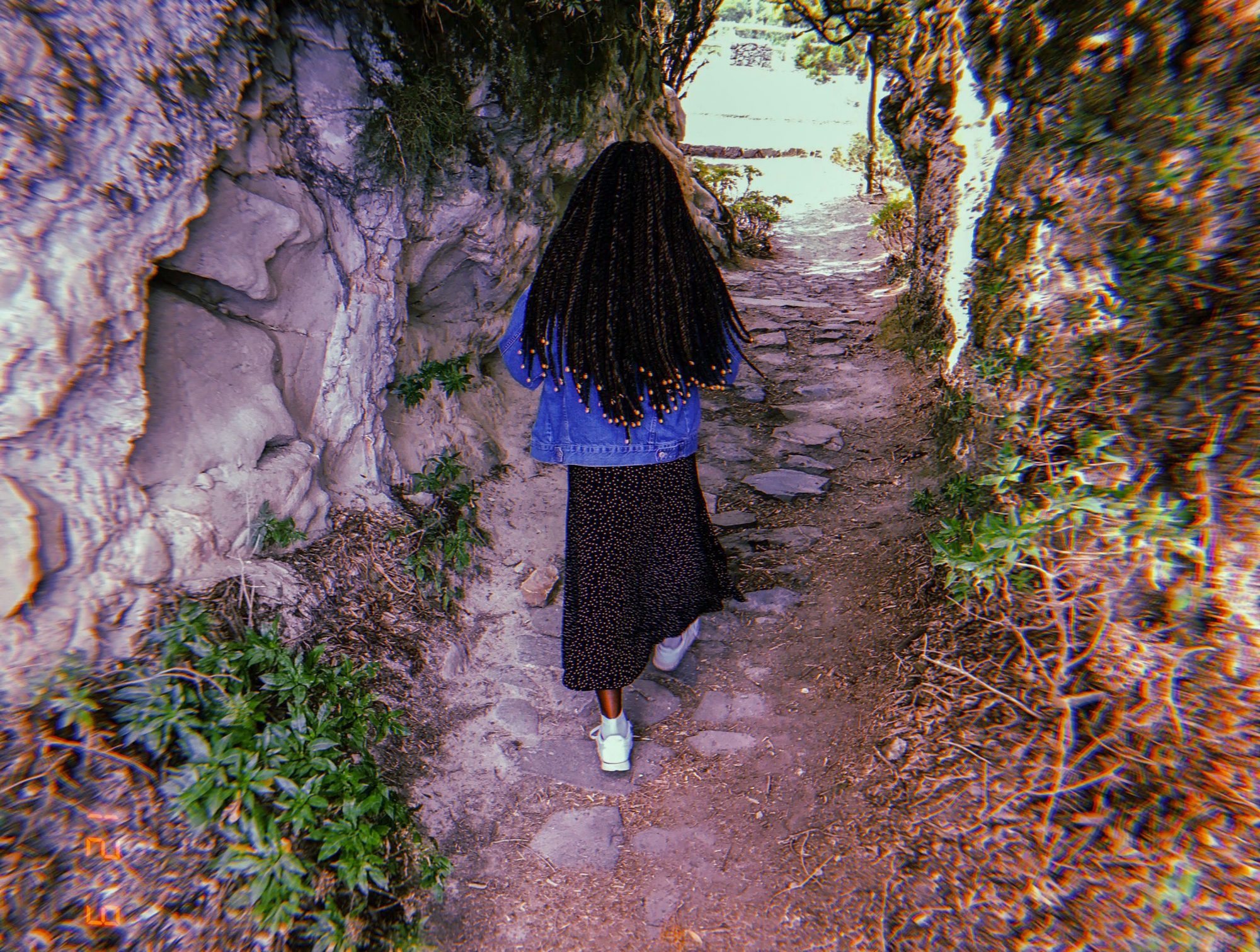
IN THE MOMENT IT FELT LIKE A SUDDEN EVENT, BUT UPON BRIEF REFLECTION I REALISED IT HAD BEEN AN EVENT IN THE MAKING. MANY DROPS FILL A CUP UNTIL IT FINALLY OVERFLOWS.
***
April 2025. The beginning of the end
I begin this piece at my desk in our London office. I’d like to call it my old desk actually, because by the time this is published, I hope for this chapter of my life to be closed.
Today I produced a video about the effect of Donald Trump’s tariffs on the EU (latest here). That’s what I did day to day as a video journalist – produce news videos and keep audiences engaged throughout them. Now, is audience engagement something I have always been passionate about? Definitely not! The only audience engagement I’ve ever been interested in is that of this blog. So that aside, no, I don’t care about audience engagement. And that’s one epiphany that led me to leaving my job.
Overall I realised there was a lot at my place of work that I no longer cared about. I didn’t care much about the company’s vision, the performance of its content, or the trickle-down effect that improving our production will have on our audience. I did, however, care enough to keep me afloat there, probably for longer than was beneficial to me. Enough to help me survive rather than thrive. Caring about my work therefore became a personal principle over time – I’m not the kind of person that can clock in and out, not valuing what I’m doing in-between.
How did I get here?
I passed my journalism diploma in 2021 and got into the industry through an internship that began two days after Russia invaded Ukraine (latest here). I was inundated with more information than I could understand, so it became my mission to comprehend all this new information. From random acronyms I couldn’t guess the reasoning behind to editorial decisions, the industry felt like a brand-new problem to solve – a puzzle to complete, something to learn and grow within.
And this was my mission for the three years I was there – first as a digital video intern, then full time staff as a digital video producer. Throughout I was determined to understand the inner workings of this huge network while just being a “good enough” journalist pitching stories from hard-hitting and breaking, to light-hearted and feel-good. I reported on so many stories in those three years that I can’t list them all.
Then Israel’s war on Gaza began (latest here). And this moment in time – this genocide, aside from teaching me a lot, triggered a chain of events.
Burnout knocked on my door
I was burnt out. I did a lot of overtime and the stories were taking a toll on my mental health. We were reminded to think of death tolls as people rather than numbers, but I knew this would grow more difficult as I became desensitised by the volume of saddening stories I learnt about. Even the mental health resources available to me didn’t seem enough to process the tragedies I reported on so regularly.
And when I got my hours back for overtime, the damage felt like it had already been done. My brain would spend so much time cooling down from an intense shift that the less intense ones felt like an oasis in a desert that I couldn’t even appreciate. Like an overheated computer, my body would feel uncomfortable, my head hot, chest tight, and my eyes so tired from looking at multiple screens during my edits. There were days I walked out of the office building feeling like a zombie, crossing the road with eyes that could look but not see, falling asleep on the train, sweaty and exhausted, knowing I would do it all over again tomorrow.
So much of my time outside of work was spent recovering from work and my creative endeavours took a back seat. So, in the last few months that I spent there, despite feeling the most confident I ever had been in my role, it felt like my day-to-day at work was cannibalising what I hardly had left of myself.
Second-hand PTSD
It came to a head in the early hours of a Saturday morning in February. My parents came home late and accidentally slammed their bedroom door, which is beside mine. It woke me up, violently. The first thought that came to my mind was “airstrike.” Airstrike! Never in my life had a loud sound triggered something so specifically violent in my head. The gravity of the situation hit me when people reacted to this story. And when I spoke to my therapist about it months later, she gave the moment a name: Second-hand trauma, second-hand PTSD.
I wasn’t even the person filming the airstrikes that I watched while searching for impactful news videos. I’d never been in a house when an airstrike made impact. I was in fact a video journalist sitting in front of a screen in London, watching violent attacks on innocent people.
And after three years of such violence consistently passing my sight, I woke up with a beating heart at the sound of a door slamming, reminiscent of something that had ended the lives of countless numbers of people across the world.
Something similar happened a month later early in the morning, in between asleep and awake, and I thought again – airstrike. What more of a reason did I need to consider how my job was impacting me? I knew my mental health was crying out for help. The light-hearted stories I did every now and then could not drown out this noise.
I’d like to be perceived within context as I write this. I’m not the only journalist in the world that is affected by the stories I’ve covered. As I mentioned earlier, I’m not the person whose house was struck, nor the person that filmed it. It wasn’t my job to blur videos of dead bodies either (even though I have had to blur other things). My coworkers were also affected by the nature of our work – I know. The correspondents and field producers who were flown to war zones within hours of them breaking out were too, along with the news anchors having to remain composed while reading out heartbreaking lines. All of it.
At times I would move through the office and look at people, wondering who else’s heart felt as heavy as mine. When I spoke to others in my last days at the job, everyone resonated with what I was saying. It is a very intense job, and the exposure to violence and traumatic content is rife. But some people have coping mechanisms to help them stay, and some simply don’t.
May 2025. Work-related stress
So, a month after I began this piece the doctor wrote me a sick note. The irony was that I’d just returned from a two-week holiday in a neutral enough state to feel optimistic about things getting better at work. Yet a week and a half after my return, I was signed off due to work-related stress. I’d known it was bad when I took a break from my overtime to speak to the doctor about feeling burnt out then returned to my desk afterwards to finish said work. I had to get it done!
In the moment the sick note felt like a sudden event. But upon brief reflection I realised it had been an event in the making. Many drops fill a cup until it finally overflows.
I took two weeks off work to try and recover from the stress. Two weeks became four, and four became six. Six weeks. I spent my days going to the gym, thinking about what burnout meant – “is it a genuine thing?” Telling people what I was up to and slowly coming to terms with the uncertainty of my near future. When I returned to work in June, I still didn’t feel like I’d had all the time I needed to recover. But I did know that that time off lifted a weight off my chest and I began to feel happier. So when I chose to return to work I told myself, the sooner I return, the sooner I can finally hand in my notice and leave.
What a process it had been, because I’d honestly known since January that I needed to leave my job (I was fasting and praying about it). But coming to this choice was a slow process. I didn’t plan to be signed off but I see it as the destined denouement of my journey. I wanted to leave by July 16th, my 26th birthday – or simply by the end of summer.
I’m gone!
I walked into work on the day I handed in my notice not knowing that I was going to do it. I entered a meeting room with my manager that morning wondering what I would say to her, and how honest I was going to be about the feelings pulling me away from my role. Maybe I’ll tell her in a couple weeks – maybe in a month? I don’t know, as long as I leave by the end of summer…
She asked me how I was doing and later, what I was “thinking.” Suddenly truth was my only answer. I could have said I’m ready to get back into the swing of things and I’m excited for my future at this network, but instead I found myself saying it’s time for me to go. The words left my mouth because I let them. In that moment, I let go of stability, a solid income, part of my identity, and elements of myself. And the rest of the day was chained to relief, anxiety, sadness and eventually numbness. I can’t believe I just quit my job, I thought to myself. It was a big deal to me. I always thought such a decision would be more premeditated than this.
I thought I’d return to work with a new job offer in my inbox, making it easy to let go of this one. But what had become more important to me was knowing that I need to “move” in my life. I haven’t been able to shake the word for months. I need to move. So, there I was, and here I am, moving.
Beyond that, I am putting myself and my mental health first. That’s something people have been commending me for – from my friends to my former colleagues. Well done for putting yourself first. What they may not realise is that I learnt to do that just now. I have not been a person that puts themself or their mental wellbeing first, but this period of my life has taught me how to do it. I can’t turn back now.
What does this feel like?
I could go on for ages about the incremental epiphanies I had in approach to my final decision but they are probably more relevant to my diary. But one that I will share follows a question my therapist asked me a day after I handed in my resignation: What did you learn? She suggested that the rollercoaster of relief to numbness was reflective of the grieving process, and that since my day of resignation I have been grieving my job. I still find that hard to accept. She then mentioned another stage of grief, which was purpose, or lessons learned. Reflection. What am I now that I have lost this thing? What has the experience taught me, if anything?
I answered, “I have to make some decisions in the absence of confidence” (less elegantly than that). I must go forward in life knowing that my decisions won’t always be made confidently! That’s when my heart comes in. In my heart, I knew it was time to go. Some people advised me to wait until I got another job before I left but that did not align with how I felt. Such advice filled me with doubt until the second before I said I want to resign. Because in that exact moment, the only person I was thinking of was myself. My decision, although lacking in confidence due to the uncertainty of life following it, was made for me, by me.
And the cherry on top is that my last day is the day before my birthday. That feels like a confirmation that I made the right choice, because it is something I previously expressed that I wanted. So divinely aligned, maybe I spoke it into existence. Maybe it was God’s plan all along.
What now?
I don’t hate journalism. I actually really like it. I had the opportunity to learn something new about the world every single day. And maybe breaking news just isn’t the home for me. Something else in the industry could eventually be and that gives me some peace.
Now I am on a break from work. Don’t be fooled, I have applied for other roles! But the job market is just as bad as they say (when don’t they say that?) and to be honest, I’m not sure what I want to do next anyway. I don’t know if I’ll try a new industry, take a course, or boomerang back to journalism.
But what I do know is that I’ve taken a step in the right direction. Plus, I live at home, I’m not married and I have no children – I have minimal responsibilities. So, if now is not the time to explore, when is? I want to use this time to reconnect with my creativity and walk down the street with nowhere to really be. Of course, money will be tight but that’s life, inconsistent. There will be a time when money is abundant again and I look forward to it.
Life is fluid. Everyone’s path is so different and there is no right way to do things. I realised that during this journey too, as I would voice my thoughts in the hope that someone would validate or correct them in case my moves were wrong.
But no answer besides my own was the right one. We write our stories as we live them, and it is so clear to me that a new chapter in mine has just begun.
 Some Variables